Get That Bag: How Rebecca Minkoff Built a Brand on Power Moves

Everyone has baggage, but icons turn their baggage into an empire. A bag is never just a bag. A bag signifies ambition, taste, and the life you’re building. For over twenty years, Rebecca Minkoff has revolutionized how women carry themselves, literally. I spoke with her to learn more about the philosophy behind the brand that redefined modern power dressing.


Your brand has been around through so many shifts in fashion. Is there something you’ve always known you wouldn’t change, no matter what?
What I’ve always known I wouldn’t change is the idea that the brand has to be true to the woman wearing it. From the very beginning, when the Morning After Bag resonated because it fit her life, not a runway fantasy, that connection with real women has been central. My brand has always been about designing pieces that feel personal, confident, and lived in, rather than chasing the latest trend or fad. My ethos has always been anchored in that west-meets-east, bohemian rock spirit that feels authentic to women who are doing, not just observing.

Looking back, what’s a risk you took that really paid off and one that taught you a hard lesson?
One risk that really paid off was shifting the focus from clothing - what I had originally trained in - to accessories, especially handbags. That decision wasn’t obvious at the time; clothing was where I’d invested my creative identity, but the success of the bags changed everything and helped define the business in a way that resonates even now.
A hard lesson came from the pandemic: when the business went from being a $100M brand to losing a huge portion of revenue, it exposed how dangerous it is to chase growth without profitability. That forced a pivot that wasn’t about vanity metrics - it was about sustainability, being lean, and making decisions based on healthy margins rather than just expansion. Learning to build profitably was painful but necessary
What’s a challenging part of being a female founder that you don’t think gets talked about enough?
How much pressure there is to embody everything. Women founders are expected to be great leaders, great communicators, great brand ambassadors, great mothers - all without showing any cracks. I’ve spoken on how fear isn’t the enemy but something to use as fuel, and that it’s vital to get comfortable with risk and discomfort, because those are where growth and leadership are really tested.
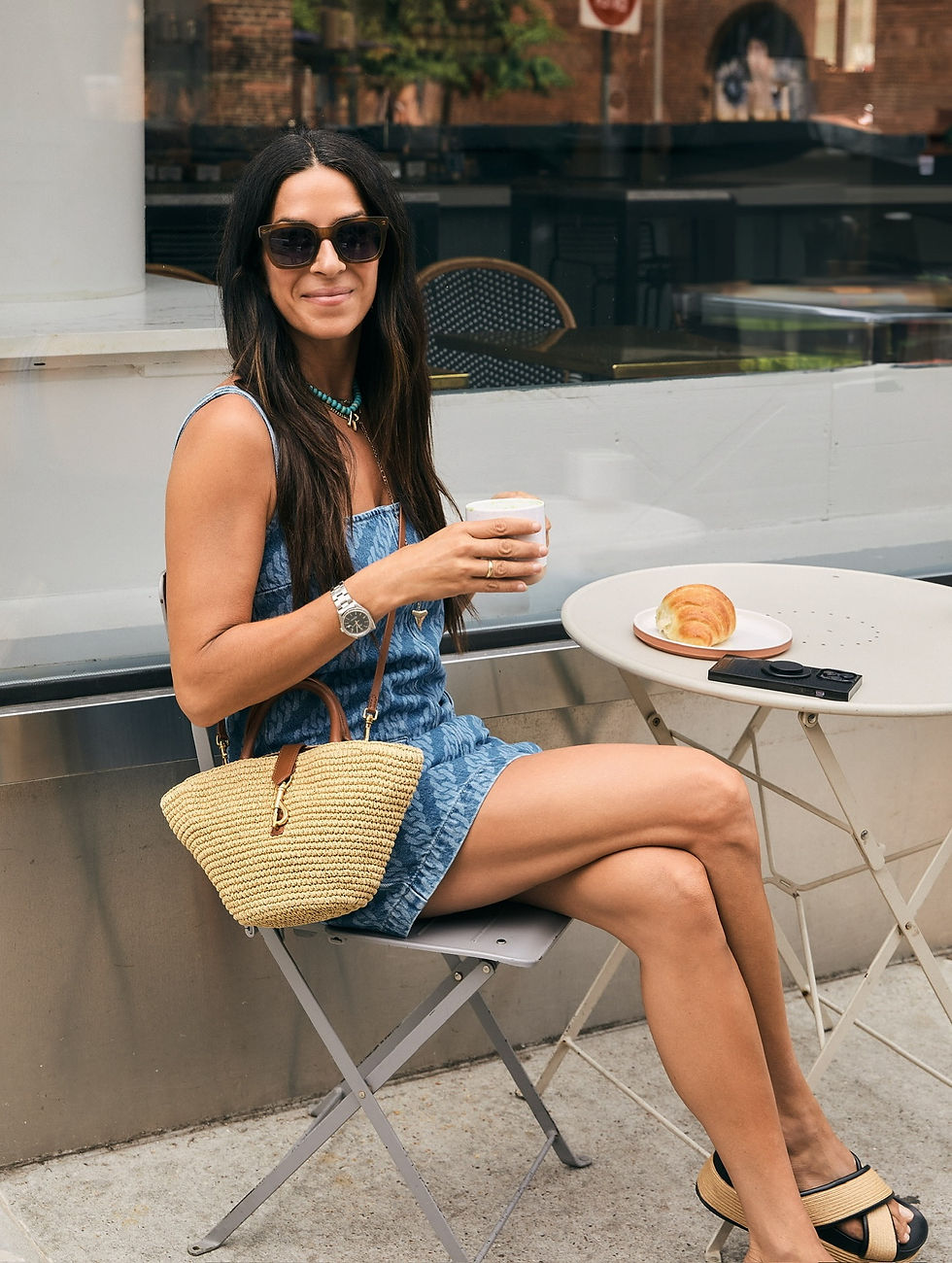
How has being in New York shaped the way you design and build your business?
New York is where I sharpened my sensibilities, learned pace, and developed a certain grit that’s now part of the voice of the brand. The city is always evolving, always moving, always in motion - and that teaches you to be adaptive not only in design but in business strategy. - Rebecca Minkoff

New York also conditions you to listen to the world - you don’t get a bubble here - and that’s been crucial in how we read trends, respect customers, and build in a way that feels expressive, relevant, and purposeful.

With everything being so fast and digital, how do you protect your creativity and avoid burnout?
Something that helps creatively is treating life as a design - understanding there will be phases where focus is different and needs shift. There isn’t such a thing as perfect balance, but there is optimization: some days you’re present with your kids, some days you’re leading a team, some days you’re building a business. Learning to accept that inconsistency as normal and not the enemy is key to protecting creativity.

If you were starting your brand today, what would you do differently and what would you still do the same?
If I were starting today, I’d still center the brand on real women - the women carrying their lives forward, not just the runway. That core connection, that idea of designing pieces for actual life moments, would remain unchanged.

What I might do differently is lean into digital storytelling earlier - the ecosystem has changed so much. Today, a brand doesn’t just exist in boutiques and department stores - it lives on screens, social channels, and in community. I’d design with that in mind from day one; I’d build narrative-first so the content, values, and community rise alongside the products.