In the Footsteps of Lewis and Clark, Through Denis Belliveau

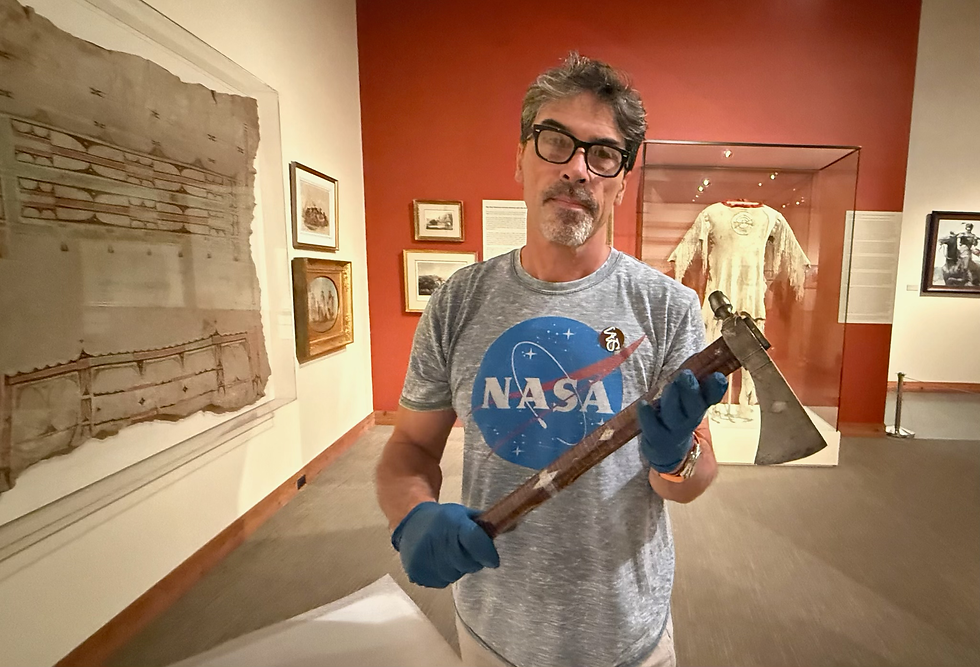
Buffalo Bill Center of the West, Cody, Wyoming (Museum purchase 21.78)/Shutterstock.com
What do students actually need to learn today? That was the question posed to Denis Belliveau and a room full of educators at a recent conference. The answers were almost identical: empathy, language learning, literacy, creativity, and resilience.
Not one of them was STEM.
So where are students supposed to learn those skills?
The humanities have become the overlooked side of education. As schools double down on STEM, we are losing the subjects that teach people how to think, communicate, and understand the world around them. History and language arts do not just inform, they shape perspective.
The real opportunity is not choosing between STEM and the humanities. It is using technology to bring the humanities back to life. Belliveau is doing exactly that with In the Footsteps of History, a program that turns history into something students can experience, not just memorize.
Husstling Around Town: Tell me your name and what this new offshoot of your work is.
Denis: My name is Denis Belliveau, and I’m the creator of In the Footsteps of History, an educational program that teaches literacy and social studies through historic journeys retraced by modern explorers.
The idea came from my two year journey following Marco Polo. When I returned and shared it with students, I saw how it made history, geography, and culture feel real.

Husstling Around Town: How does your work connect to the way students are taught today, especially with primary sources?
Denis: Schools focus a lot on primary sources. Explorers like Marco Polo and Ibn Battuta wrote about their journeys firsthand. I used Marco Polo’s writings like a travel guide and went to the same places, comparing them to today. When I brought that into classrooms, teachers saw it as a modern primary source. Students connect to that immediately.

Husstling Around Town: History is being reevaluated through a modern lens. How do you approach that with figures like Lewis and Clark?
Denis: It is important to show complexity. Lewis and Clark were products of their time, and their journey contributed to expansion that harmed Native American communities. We teach both sides. Students learn the historical impact and also the Native American perspective so they understand the full picture.
Husstling Around Town: How does Gen Z respond to this kind of learning?
Denis: Gen Z responds to immersive experiences. We created digital simulations where students play through history. In our Lewis and Clark program, they play as Sacagawea, make decisions, and move through the environment. It feels like a game, but they are learning the entire time.

Husstling Around Town: Where do the humanities fit in a world focused on STEM?
Denis: The humanities are critical. At an education conference, educators were asked what students need most today. The answers were empathy, global awareness, communication, and cultural understanding.In a global and AI driven world, what stands out is human connection. That comes from the humanities.

Husstling Around Town: What role does your program play beyond teaching history?
Denis: We inspire curiosity. Students experience the material and then meet real explorers and scientists. That is when it clicks. They start to see new possibilities for themselves.


