The Art of Noticing: How Luke Jerram Changes the Way We See the World
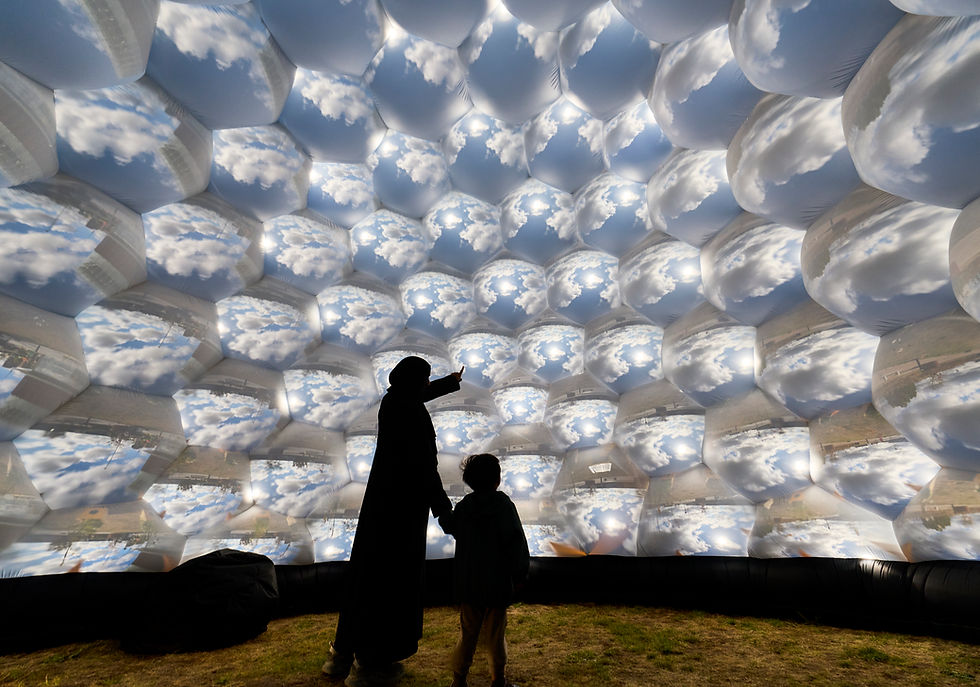
I reflexively take a picture of a piece of art before really looking at it. It’s almost Pavlovian: when I see something that piques my interest, I immediately want to document it. As a writer, it serves me well. As someone who appreciates art, I sometimes miss details.
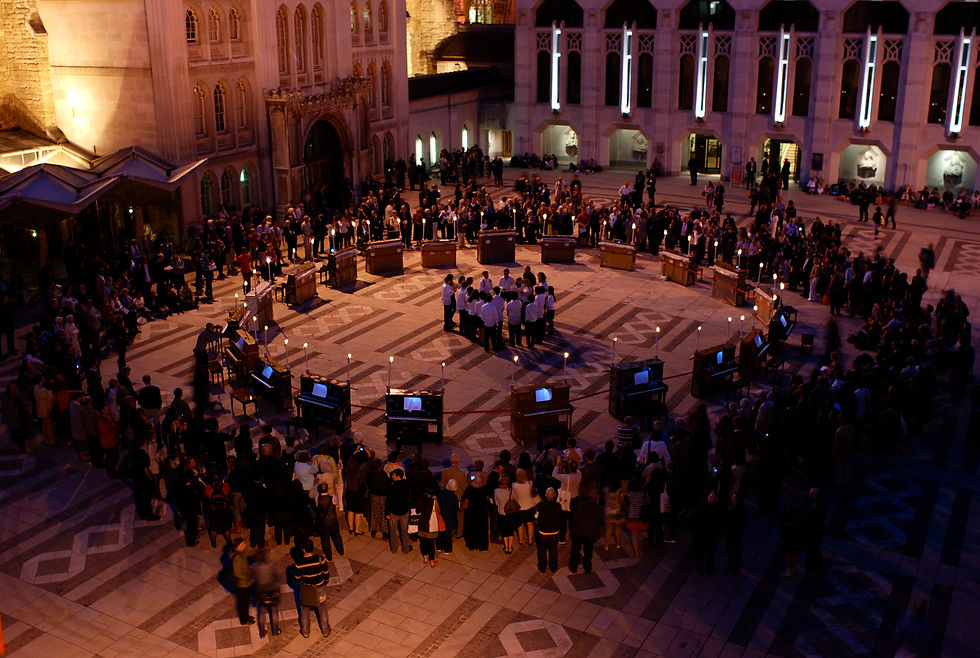
In advertising, we are witnessing brand activations that look like visual art and visual art employed to sell a product. Where can you find art that lets you simply marvel? That question led me to Luke Jerram’s work.
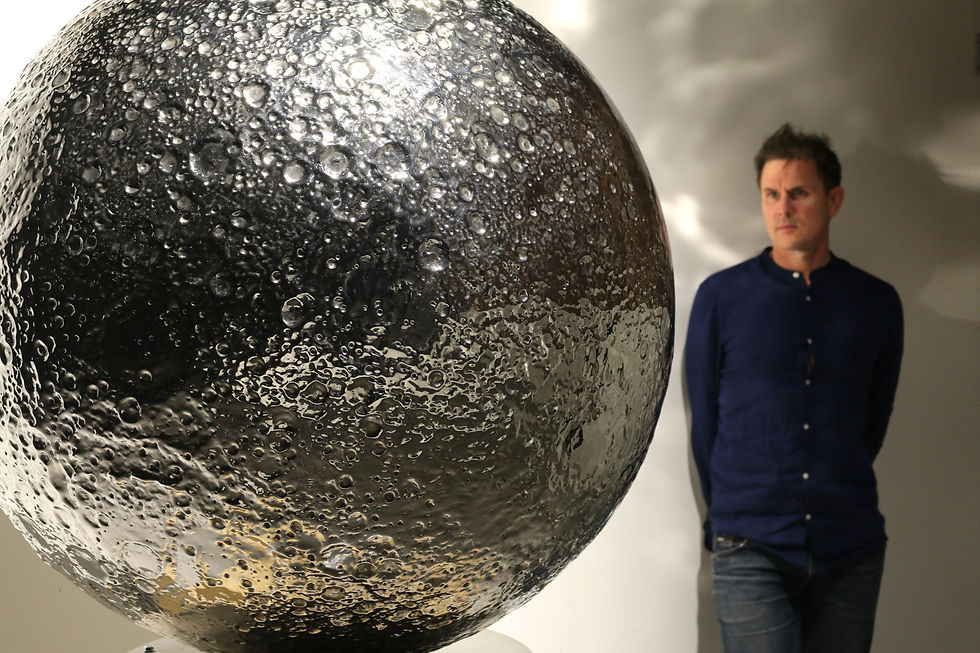
The World According to Luke Jerram.
Jerram alchemizes science, art, and engineering to give viewers the chance to marvel at something in real life, rather than just staring at it through a phone. I first heard of Jerram when the Instagram account Uncovered posted that his work Gaia is on display at the Cathedral of St. John the Divine through October 8, 2026. In an era of algorithmic optimization, I stopped scrolling and stared at the world on my phone. I laughed a little. I was actively doing the thing I try not to do. I looked at a work meant to be seen in person, knowing I couldn’t visit before the globe circled away to its next location.
When I cold emailed Jerram’s team, I didn’t expect them to respond. But I was lucky enough to have Jerram’s project manager, Leela, respond to my email. Typically, I interview a subject. In this piece, I dive into how giant spheres and shapes can bring perspective to our microcosms.
Oil Fountain

On September 26, 1962, CBS premiered the show The Beverly Hillbillies. The show's theme song discusses how the family struck black gold (oil). Oil's symbolic value has increased in the past sixty-four years. It's not just black gold; it's political currency that we normally just see at the gas station. Jerram created Oil Fountain to "highlight how contemporary society is reliant on oil and the need to move away from this dependency. It was designed to stimulate debate and discussion about the topic and the need for action” (Jerram, 2023). Jerram carved extinct flora and fauna into the foundation to show viewers the costs of our global and individual choices. Viewers experience the price of opulence and convenience.
Image courtesy of Luke Jerram. Image courtesy of Luke Jerram. Image courtesy of Luke Jerram.
Images courtesy of Luke Jerram.
Helios
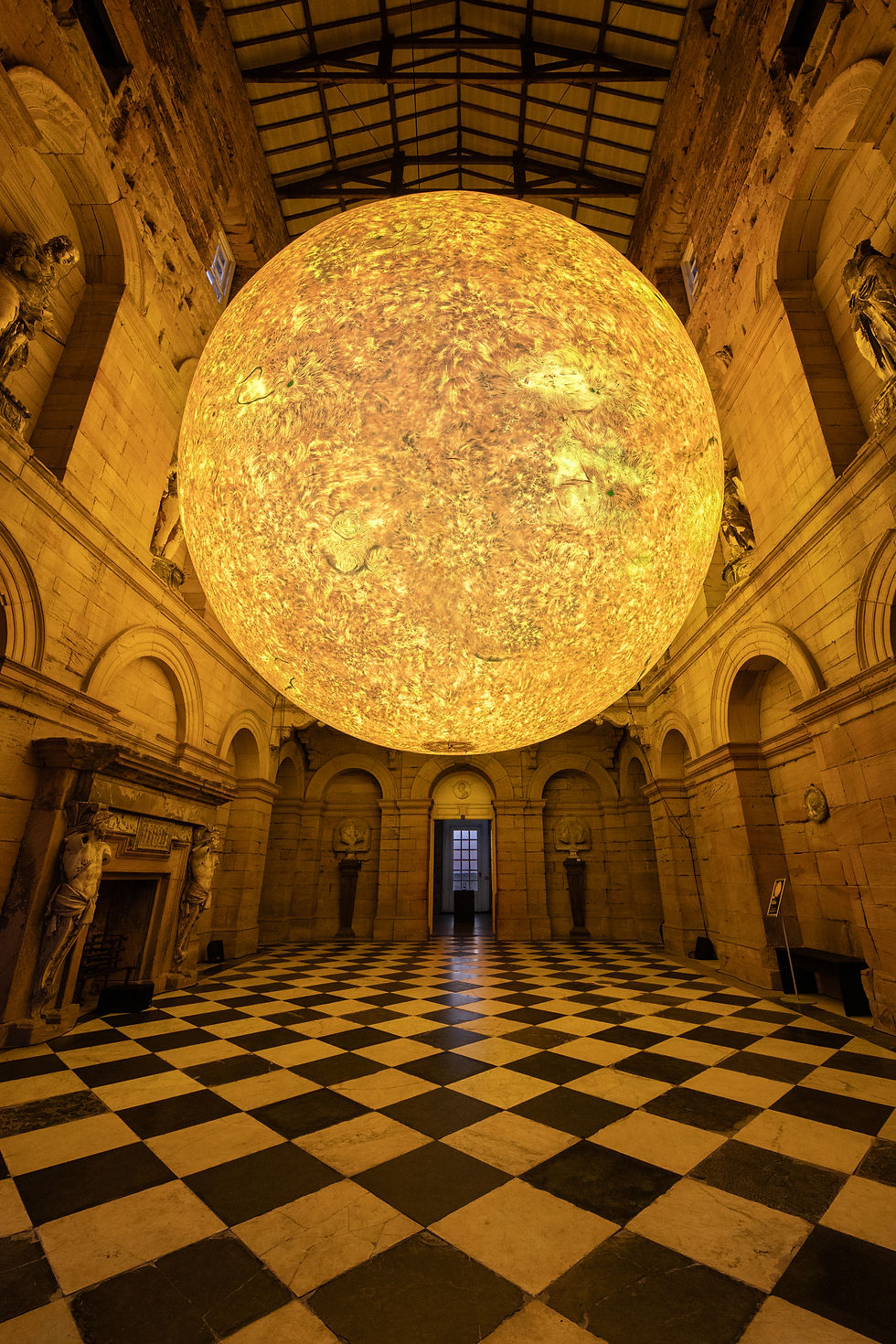
When Cristina Yang said goodbye to Meredith Grey and Grey-Sloan Memorial she tells her that she is the sun and should remember that she is the center point of her life. As I've gotten older, Yang was trying to tell her that while relationships are important, your sense of self dictates the direction of your life. Jerram's Helios embodies this ethos. The sculpture is "an approximate scale of 1:200 million, each centimeter of the internally lit spherical sculpture represents 2000km of the Sun’s surface" (Jerram, 2024). Jerram's piece allows viewers to see the sun without its harmful side effects. As one looks at the work and basks in its light, you can almost hear Cristina Yang reminding you that you are the sun.
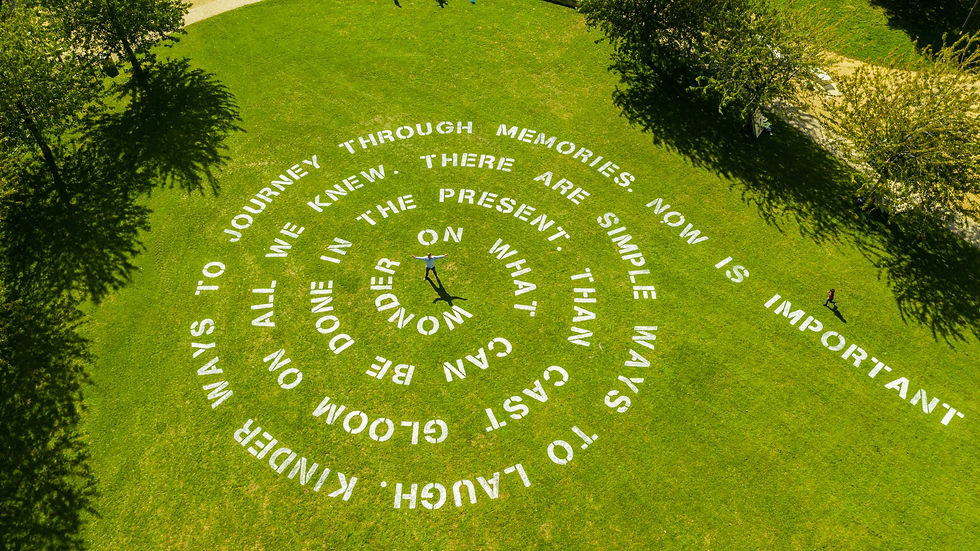
Once a week, my phone tells me how much time I spent looking at a screen. It’s an ungodly number that makes me cringe. Most of the time, my world is reduced to a computer or phone screen as I work. Ironically, I found Luke Jerram on my phone. Exploring his work showed me how art can create conversations and reminded me that the world is bigger than my immediate surroundings.


